THANK YOU FOR SUBSCRIBING

Auto Tech Outlook Weekly Brief
Be first to read the latest tech news, Industry Leader's Insights, and CIO interviews of medium and large enterprises exclusively from Auto Tech Outlook
![Samsara [NYSE: IOT]: Driving Smarter Fleets through Connected Intelligence](https://www.autotechoutlook.com/newstransfer/upload/1-9a0lr-kf642.jpg "Samsara [NYSE: IOT]: Driving Smarter Fleets through Connected Intelligence")
Samsara delivers a connected operations platform that unifies fleet data driver behaviour and workflows into real time execution systems. Its integration of telematics AI video and cloud software enables continuous monitoring proactive safety interventions and dynamic decision making across large-scale fleet operations.
How does Imagry enable autonomous driving without HD maps or additional sensors? Imagry is an AI-based autonomous driving software provider that builds a full end-to-end stack, covering perception, motion planning and control, for passenger vehicles, shuttles, and buses.. It has been driving on public roads since 2019 without HD maps, LiDAR or radar, using a camera-only approach. “We are the only player that provides end-to-end autonomous driving solutions for both passenger vehicles and buses in Europe, Japan and the U.S.,” says Eran Ofir, CEO. Most autonomous systems rely on HD maps and operate inside tightly defined geofenced areas. Imagry is HD mapless, meaning the vehicle does not need a pre-prepared HD map. Instead, it builds a live understanding of the road as it drives, similar to how a human navigates unfamiliar streets. The Software Architecture Behind Mapless Autonomy What software architecture allows Imagry to build real-time road understanding using cameras? Imagry removes complexity at the sensor layer by relying only on cameras. Its perception is modular, with multiple neural networks focused on elements such as traffic lights signs, pedestrians’ lanes, bikes and parked vehicles. Each network is trained on very large image datasets, based on hundreds of millions of images passing through.


Tasso Roumeliotis, Founder and CEO
Why do dealership service departments struggle to maintain reliable customer communication? Modern dealership service departments operate less like retail counters and more like hospitals, where multiple specialists coordinate around a shared operational outcome. Service advisors, technicians, parts teams, BDCs, and managers must align in real time around vehicles customers depend on daily. Without infrastructure built for this level of complexity, communication becomes the first point of failure. Calls go unanswered, response delays accumulate, and industry data shows that dealerships take an average of nearly 23 hours to respond, with roughly half of inquiries missed. This breakdown quickly erodes customer trust and reflects the limits of running complex operations on tools designed for simpler workflows. Numa is the result of recognizing dealership communication as an operational systems problem, not a staffing or effort issue. Built to support how dealerships actually operate today, the platform embeds AI at the core of its communication layer, treating customer operations as an intelligence-driven workflow that replaces fragmented manual handoffs. By unifying calls, messages, and internal coordination in a single environment, Numa gives teams the shared context and real-time visibility needed to manage growing operational complexity. “Customer experience in a dealership is a team sport. When teams aren’t connected, customers feel it. Numa brings every call, message, and handoff into one system so teams can work together and customers never fall through the cracks,” says Tasso Roumeliotis, founder and CEO. Fixing Dealership Communication at the Structural Level How does Numa stabilize inbound demand and dealership communication workflows? Numa addresses four key pressures on dealership performance: inbound overload, fragmented coordination, advisor overload, and limited managerial visibility. The company’s platform stabilizes inbound customer engagement by ensuring every call is answered with full operational context. Its context-aware inbound Voice AI continuously absorbs demand at the entry point, using customer history, vehicle status, prior interactions, and staff availability to maintain continuity. This directly addresses inbound overflow that now consumes much of the BDC’s time and slows response. How does a unified communication layer improve coordination across dealership teams? Fragmented coordination between departments is solved through Numa’s Smart Inbox, which creates a unified communication layer across the dealership, giving teams a single source of truth for customer interactions. By consolidating calls, messages, and internal notes, the platform improves execution and resolves collaboration gaps that emerge when teams rely on disconnected tools. The Smart Inbox also introduces real-time task prioritization, converting fragmented activity into a structured workflow. Service advisors no longer rely on memory or constant interruption to manage their workload. Instead, they receive prioritized tasks and guided follow-ups that reflect real customer urgency, enabling them to stay responsive as they move between customers, technicians, and parts teams.
Electric Vehicle

Danny Shapiro, Senior Director of Automotive, NVIDIA (NASDAQ: NVDA)
Automotive Safety and Security

Dan Constantino, Associate Vice President, Cybersecurity, Cox Automotive
Automotive AI

Trent Randles, Manufacturing Engineering Manager, BorgWarner Inc.
Dealership Management

Bryan Goodman, Director of Artificial Intelligence Ford Motor Company [NYSE: F]
Automotive AI

Steven Strobel, Head of Industrial, Manufacturing & Logistics and Aaron Woodward, Principal - Head of Sustainability, Rider Levett Bucknall RLB

Automotive AI
Danny Kohanek, SVP of Manufacturing, SUMCO

Autonomous Vehicle
Stef Crum, CEO & Co-Founder, Reditus Space
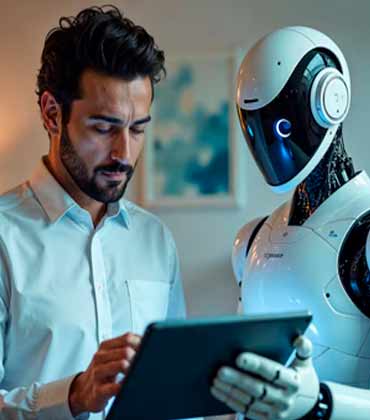
AI agent dealership solutions advance through automation, multi-agent collaboration, personalization, and real-time engagement, improving efficiency and transforming automotive customer experiences.
Connected Intelligence Driving Autonomous Mobility
This edition’s cover story features Samsara [NYSE: IOT], recognized as the Fleet Management and Safety Platform Company of the Year 2026 for advancing connected fleet intelligence through its unified cloudbased architecture. By integrating telematics, AI-enabled video analytics and workflow coordination into a single operational layer, the company demonstrates how visibility into vehicle behavior and route execution supports safer driving, predictive maintenance and improved operational alignment. This integrated ecosystem highlights how data-driven decisionmaking is transforming fleet operations into responsive, continuously optimized systems.
Among the featured innovators, Imagry, recognized as Top Mapless AI-Based Autonomous Driving Software 2026, demonstrates how visionbased autonomy enables vehicles to interpret surroundings in real time without dependence on pre-built maps. Its scalable architecture supports deployment across passenger vehicles and public transport systems, reinforcing flexibility in complex urban environments. Complementing this capability, Numa, recognized as Top AI Agent Dealership Solution 2026, illustrates how AI-powered communication workflows unify dealership interactions, ensuring consistent service coordination and improved customer engagement across service operations.
Industry insights further strengthen this discussion through the perspectives of Danny Kohanek, Senior Vice President of Manufacturing at SUMCO, and Stef Crum, Chief Executive Officer and Co-Founder of Reditus Space. Kohanek highlights the role of advanced silicon wafer manufacturing in supporting the reliability and performance demands of modern automotive electronics. Crum underscores the importance of developing robust mobility infrastructure within space environments, illustrating how emerging space logistics capabilities will influence longterm transportation innovation.
As autonomous systems, intelligent workflows, and advanced materials converge, the organizations shaping these domains will define the trajectory of next-generation mobility. We invite you to explore this edition and engage with the ideas shaping a more intelligent, connected and autonomous mobility landscape.
![Samsara [NYSE: IOT]: Driving Smarter Fleets through Connected Intelligence](https://www.autotechoutlook.com/newstransfer/upload/2-gf806-.jpg "Samsara [NYSE: IOT]: Driving Smarter Fleets through Connected Intelligence")